


Recently, a venture capitalist friend called me in a panic. One of the biggest investments in his portfolio had decided to cut its entire customer service team and replace it with AI agents. The company cut costs by 96%. Then the churn began. In one quarter, it lost half of its customers.
At Lanai, we see versions of this pattern everywhere: adoption spikes, costs drop, and then the customer experience quietly frays. The problem isn’t “AI agents.” It’s that most companies can’t actually see where AI is being used, what it’s doing, and when it’s failing.
Many companies are making the same dangerous assumption about AI right now. They're banking on the idea that AI, with its promise of efficiency and cost savings, can replace humans so they can reap the financial rewards. AI can solve tasks. It can even solve tickets. But it rarely solves the problem behind the problem—the human context where all the value lives.
And in business, the problem behind the problem is where all the value lives.
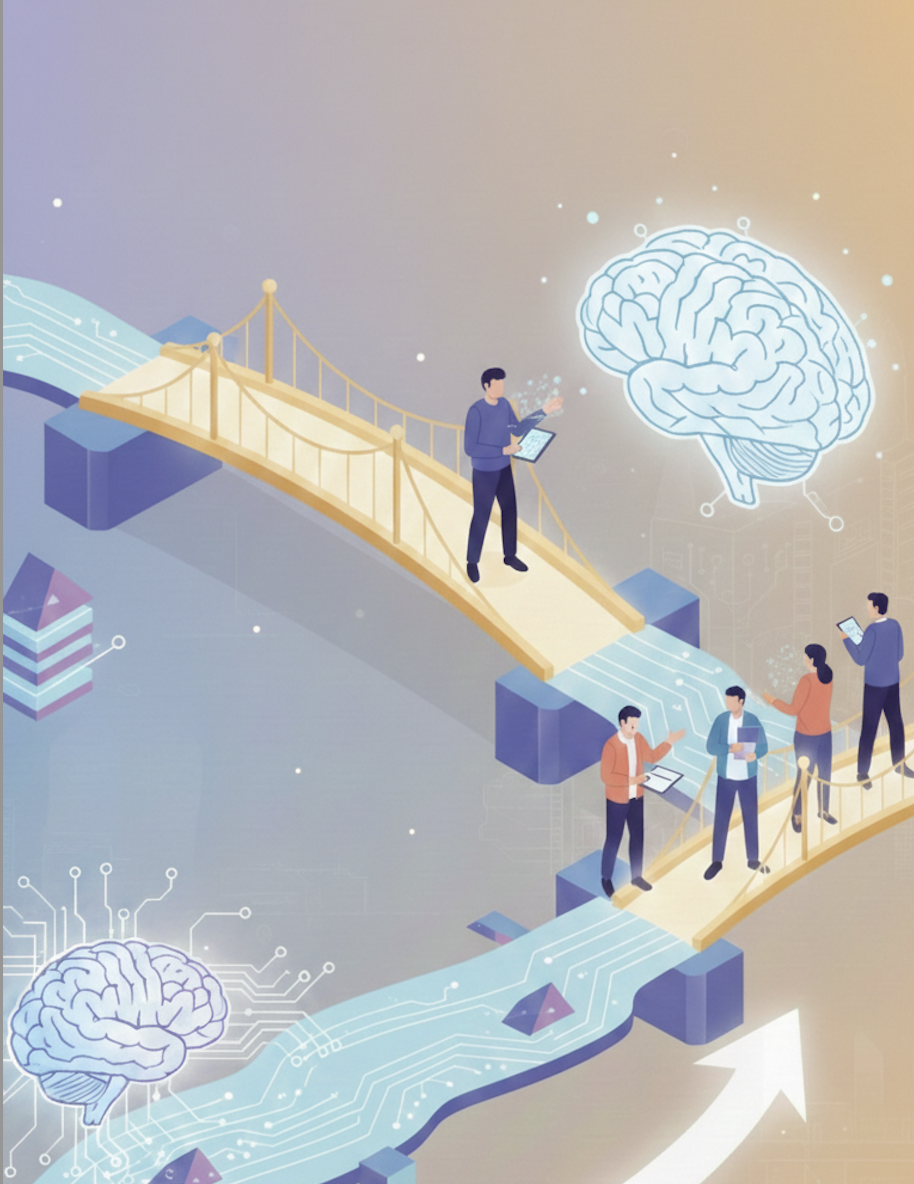
We've seen this kind of economic disruption before. We called it offshoring — moving jobs overseas to cut costs. Now we're entering the era of "agentshoring" — companies swapping out cognitive work, sometimes entire teams, with AI agents. The risk isn’t just operational. It’s customer-facing: when the work gets cheaper, the penalties for getting it wrong get higher. It also misses a crucial point: AI's true value comes from human insight, not from replacement.
Even celebrated AI success stories depend on human work. Before T-Mobile achieved a "30% efficiency gain," they spent 18 months building a human-assembled, unified "AI factory" for all their data. JPMorgan cut loan processing time in half, but not before humans helped connect 47 separate data systems.
The unsexy truth? AI doesn’t scale until the plumbing does. And customers don’t care that your data is messy—they just experience the delay, the deflection, and the dead ends. Every AI success story starts with fixing the plumbing and instrumenting it—so you can see what the model is touching, what it’s returning, and how customers are experiencing it. That’s a human story.
This is all connected: cost collapse changes the economics and raises the bar on trust.
When Costs Collapse
Most successful businesses operate on a simple equation: Solve a customer's problem for more than it costs you to solve it. AI doesn't change the equation. It obliterates one side of it.
The numbers are staggering. Customer service that once cost $25 an hour? The Boston Consulting Group documented companies cutting those costs by 90%. Legal document prep that ran $500 an hour? McKinsey found 20% cuts at big firms — but for standardized documents, that $500 approaches $50 or less. Writing code at $200 an hour? BCG found AI makes developers 50 times more efficient on some tasks. That same hour of human work now costs $4 when AI does the heavy lifting.
We're not talking about modest productivity gains. We're talking about the collapse of entire cost structures. And that collapse has consequences beyond any single company's balance sheet.
When costs collapse, companies race to automate. Customers, meanwhile, are grading you on the same thing they always have: did you resolve my issue, did you understand me, and did you make it right when you didn’t?
When customer service costs drop 90%, what happens to the millions of Americans employed in call centers?
When legal document prep becomes automated, how do junior attorneys gain the experience that once led to partnership?
The efficiency revolution raises questions not just about corporate strategy but about the nature of work itself and who benefits from AI's gains.
The Problem Behind the Problem
Here's what the efficiency-obsessed miss: Before you can capture AI's potential value, you face a choice that determines everything. Are you building AI products or using AI to augment work?
Building AI products requires millions of dollars, months or years of scoping and a team of engineers. Most companies think they need this.
They don't.
At Lanai, what we see is simpler and harder: you need safe access to the right data and visibility into how AI is actually being used—especially outside sanctioned tools.
What 95% of businesses actually need is far simpler, but no less critical: AI assistants and agents that complement human employees. The right approach means creating unified data access and understanding how humans actually use AI.
Consider Netflix versus Blockbuster. Many think Netflix won by solving video rental. They actually won by solving loneliness at 11 p.m. on a Tuesday.
Blockbuster optimized for efficiency — more locations, faster checkouts, bigger selection. Netflix asked a different question: What if the store came to you and never charged late fees?
In most enterprises, the “unstated need” is trust: I want speed, but I also want recourse when things go sideways.
AI could have built the perfect Blockbuster: inventory optimization, dynamic pricing, predictive stocking. Humans built Netflix by focusing on an unstated need.
This distinction — between solving stated problems and discovering unstated needs — will separate winners from losers in the AI economy.
The Skills That Actually Matter Now
Humans are, in fact, more important than ever. But they'll have to evolve to avoid agentshoring.
A Fortune 500 CEO recently told me that even with heavy investments in AI, his company isn't reducing headcount. It's reallocating what its people do. "The 100 people doing X today will be 20 people doing five times as much tomorrow," he said.
Translation: AI won’t take every job. But it will reshape most jobs—and the winners will be the teams that pair automation with judgment.
The humans who survive and prosper will fall into three categories:
Translators bridge AI capability and business value. They don't just write prompts, they deconstruct complex problems into AI-solvable chunks.
Architects build the infrastructure that makes AI work at scale. This includes all the unglamorous but critical work like making data AI-accessible and creating systems to monitor how AI is actually being used.
Multipliers use AI to become 10x versions of themselves. They know how to use AI, but they’re not experts. And they have discernment: They know when AI output is good enough and when it needs a human touch.
You can tell which businesses understand this. Consider two banks. Both use AI to approve loans in three minutes. Both offer identical rates and terms. But when Bank A's AI denies your loan, you get a form letter. When Bank B's AI denies your loan, a human calls within an hour to explain why and explore alternatives.
Bank B wins—on retention, referrals, and complaint rates. Not because their AI is better, but because they understand that in the age of algorithmic abundance, human accountability is the scarce resource.
What Becomes Possible
AI doesn't just make existing solutions cheaper; sometimes it makes previously impossible solutions possible.
A personal accountant for a middle-class family? Impossible at traditional costs. Profitable with AI assistance. Custom curriculum for every learning style? Fantasy before. Feasible now. Preventive health monitoring for everyone? The math never worked. Now it does.
These aren't just business opportunities. They're questions about what kind of society we want to build. Will AI's cost collapse democratize services once available only to the wealthy? Or will it simply concentrate gains among those who own the technology?
The answer depends on whether companies build the foundation to execute well.
Companies with unified data and visibility into AI use achieve positive return on investment three times faster. They have 70% less tool redundancy. Companies without that foundation? Still debating tool selection a year later.
The Choice
Every business faces the same choice: Compete with AI on efficiency and lose, or use AI to become more radically human and win.
The math is elegant: When the cost to solve problems approaches zero, the number of solvable problems approaches infinity. The value of human judgment, empathy, and accountability increases exponentially.
Your customers are still humans with human needs. They’re messy, irrational, emotional needs that no algorithm can fully map. The businesses that remember this, and build the infrastructure to support it, won't just survive the agentshoring revolution. They'll use it to become more human than ever.
Start with the plumbing. End with the purpose. Win with both.